
The National Parks: America's Best Idea
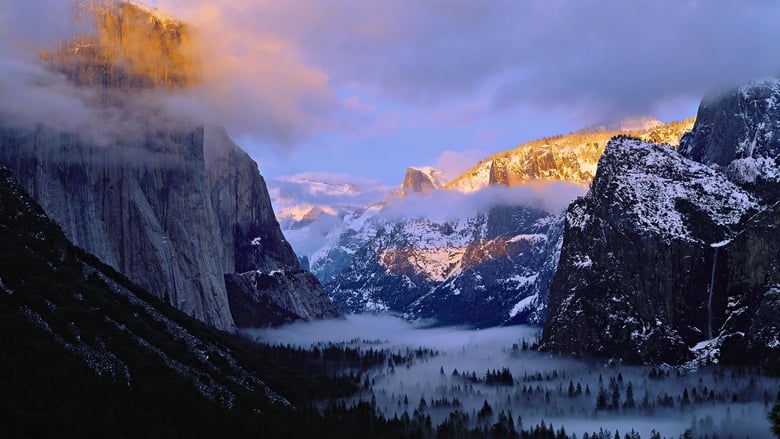
This documentary miniseries explores how America’s national parks were created and protected over time. Across sweeping landscapes and personal stories, it shows how people from many walks of life fought to preserve extraordinary places and shaped a broader idea of shared public land.
Watch coverage

Also available on
2


Every episode is already streaming. You only need about a month to binge it.
Subscribe ~1 month · binge all 3 episodes, then cancel
Notes & ratings
0 ratings
0 notes
Season 1
-
3
E3
The Empire of Grandeur (1915 – 1919)
In the early 20th century, America has a dozen national parks, but they are a haphazard patchwork of special places under the supervision of different federal agencies. The conservation movement, after failing to stop the Hetch Hetchy dam, pushes the government to establish one unified agency to oversee all the parks, leading to the establishment of the National Park Service in 1916. Its first director, Stephen Mather, a wealthy businessman and passionate park advocate who fought vigorously to establish the NPS, launches an energetic campaign to expand the national park system and bring more visitors to the parks. Among his efforts is to protect the Grand Canyon from encroaching commercial interests and establish it as a national park, rather than a national monument.
Sep 29, 2009 · 111m -
5
E5
Great Nature (1933 – 1945)
To battle unemployment in the Great Depression, Franklin D. Roosevelt creates the Civilian Conservation Corps, which spawns a "golden age" for the parks through major renovation projects. In a groundbreaking study, a young NPS biologist named George Melendez Wright discovers widespread abuses of animal habitats and pushes the service to reform its wildlife policies. Congress narrowly passes a bill to protect the Everglades in Florida as a national park – the first time a park has been created solely to preserve an ecosystem, as opposed to scenic beauty. As America becomes entrenched in World War II, Roosevelt is pressured to open the parks to mining, grazing and lumbering. The president also is subjected to a storm of criticism for expanding the Grand Teton National Park in Wyoming by accepting a gift of land secretly purchased by John D. Rockefeller Jr.
Oct 1, 2009 · 115m -
6
E6
The Morning of Creation (1946 – 1980)
Following World War II, the parks are overwhelmed as visitation reaches 62 million people a year. A new billion-dollar campaign – Mission 66 – is created to build facilities and infrastructure that can accommodate the flood of visitors. A biologist named Adolph Murie introduces the revolutionary notion that predatory animals, which are still hunted, deserve the same protection as other wildlife. In Florida, Lancelot Jones, the grandson of a slave, refuses to sell to developers his family's property on a string of unspoiled islands in Biscayne Bay and instead sells it to the federal government to be protected as a national monument. In the late 1970s, President Jimmy Carter creates an uproar in Alaska when he sets aside 56 million acres of land for preservation – the largest expansion of protected land in history. In 1995, wolves are re-established in Yellowstone, making the world's first national park a little more like what it once was.
Oct 2, 2009 · 114m