Fall of Eagles
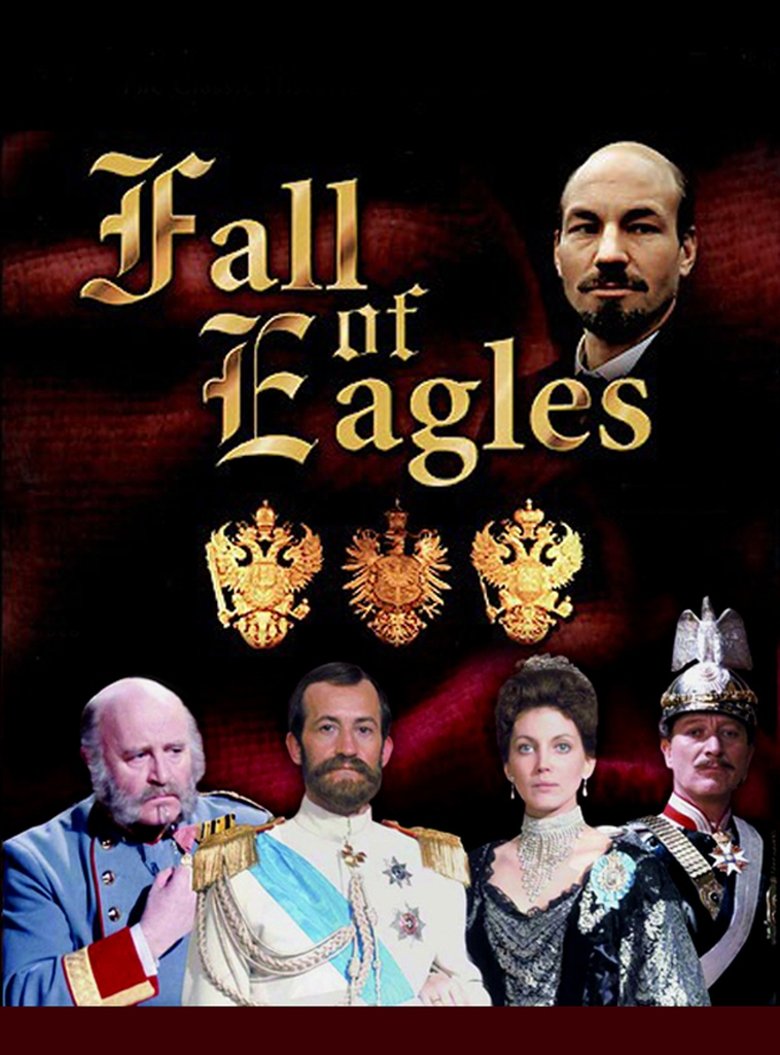
"Fall of Eagles" is a 13-part British television drama aired by the BBC in 1974. The series portrays historical events from 1848 to 1918, dealing with the collapse of the ruling dynasties of Austria-Hungary (the Habsburgs), Germany (the Hohenzollerns) and Russia (the Romanovs).
Notes & ratings
0 ratings
0 notes
Season 1
-
3
E3
The Honest Broker
With Germany united under Prussia, Bismarck seeks a stabilizing alliance with the Austrians and Russians through the League of the Three Emperors. His plans extend to influencing the Kaiser’s grandson Wilhelm. In 1888, Wilhelm I and his successor Frederick III, both die (the Year of the Three Emperors). Kaiser Wilhelm II rapidly assumes the throne; Bismarck is forced to resign when his policies and political style clash with those of the young emperor. The ageing chancellor seeks support from Vicky, but she spurns him and blames his meddling for her estrangement from her son.
Apr 12, 1974 -
4
E4
Requiem for a Crown Prince
On 30 January 1889, tragedy strikes the House of Habsburg when liberal Crown Prince Rudolf of Austria-Hungary and his young mistress Baroness Mary Vetsera are found dead at the hunting lodge at Mayerling in the Vienna Woods, 24 km southwest of the capital, in an apparent murder-suicide by Rudolf. In Vienna, and at Mayerling, imperial officials contrive to hide the events of the Mayerling incident to prevent a massive public scandal, misleading the emperor and the empress about the true nature of the deaths. Rudolph’s letters and the report by Professor Widerhoffer finally reveal the truth to the royal couple. The episode, narrated in hindsight, ends with news of the assassination of the Empress in 1898 in Geneva.
Apr 19, 1974 -
7
E7
Dearest Nicky
Nicholas is preoccupied by strikes and the humiliating war with Japan; the continual unsolicited advice and gifts of his cousin, Wilhelm II; and the health of his only son Alexei, who has hemophilia. A rising tide of discontent among St Petersburg’s working class leads to the assassination of the interior minister Vyacheslav von Plehve. Police attack a demonstration led by police spy and priest Fr Georgy Gapon, killing many. Nicholas, believes that his people are still loyal and resists change. Wilhelm attempts to forge an alliance with Russia. Nicholas, considering Germany’s assistance, is willing to sign, but his ministers insist that they must first show it to France for consideration.
May 8, 1974 -
9
E9
Dress Rehearsal
Britain’s King Edward VII makes a visit to the Royal Russian yacht to discuss an alliance with Russia. Meanwhile, Russia’s Foreign Minister Alexander Izvolsky, begins intriguing to have the Bosphorus opened to the Black Sea Fleet, preferring access to the Dardanelles over guaranteeing Serbian sovereignty against Austria in the Balkans. He quickly finds himself outplayed by Alois Lexa von Aehrenthal when Austria rapidly annexes the Turkish territory of Bosnia and Herzegovina, precipitating the Bosnian crisis. In its wake and with the sting of the loss to Japan still fresh, Russia is again outwitted and embarrassed by diplomatic intrigues and forces beyond its borders.
May 22, 1974 -
11
E11
Tell the King the Sky is Falling
With the resolve and the morale of the Russian army plummeting, Nicholas decides to leave the capital to take personal command of the army, leaving Alexandra behind as his eyes and ears in Petrograd. His son Alexei soon joins him, but his frail constitution soon leads to another health scare. Alexandra, becoming increasingly unpopular and insecure, has come to rely heavily on the advice and cures of faith healer Grigori Rasputin, who also advises the Empress on which religious people should be in government. As a result, Alexander Protopopov is appointed as a minister, but his ineptitude leads other politicians, such as Mikhail Rodzianko and Alexander Trepov, to scheme for change.
Jun 5, 1974 -
12
E12
The Secret War
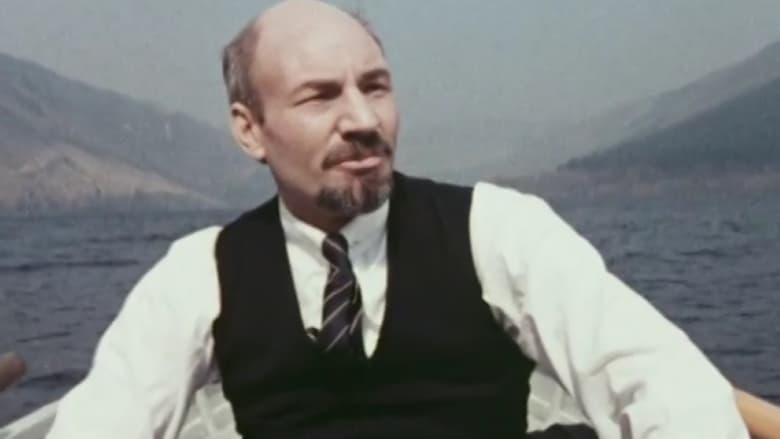
As the war continues, Kaiser Wilhelm, tiring from his responsibilities, allows Ludendorff, Hindenburg, Admiral von Holtzendorff and Bethmann-Hollweg to propose riskier strategies for ‘total victory’ (such as unrestricted submarine warfare against neutral shipping). With Rasputin now dead, Alexander Kerensky incites open revolt in the Duma, who support his insistence on the abdication of the Tsar. The Kaiser, fearful of creating a “Bolshevik nemesis”, reluctantly allows Lenin and his compatriots to travel through Germany from exile in Switzerland. With the help of industrialist Dr Helphand, the Russians finally arrive to a heroic homecoming in St Petersburg.
Jun 12, 1974 -
13
E13
End Game
With Franz Joseph now dead and the Romanovs murdered by the Bolsheviks, Kaiser Wilhelm is the lone eagle still standing. German troops move west from the now peaceful Russian front, but the Spring Offensive fails, with the Allies making surprising advances across France and Belgium. Wilhelm’s optimism of his soldier’s fighting will is not fully shared by the General Staff, particularly because of the desperate erosion of the home front. Wilhelm’s cousin Prince Max is made Chancellor as a concession to reform, but that only hastens the clamour for change. The 1918 German revolution finally forces the Kaiser’s abdication, and he flees to exile in the Netherlands.
Jun 19, 1974 · 85m